With 20 years of road testing under my belt, I’m calling out the biggest biased take in the EV market right now: mainstream car fans overrate Tesla’s tech hype and severely underrate the Hyundai Ioniq 5’s real-world practicality. Most buyers automatically pick the Model Y for brand reputation and Supercharger access, but after six weeks of back-to-back daily testing, the Ioniq 5 beats Tesla in nearly every commuter-focused category people actually care about.
The 800V electrical architecture is not just a marketing buzzword—it completely changes roadside charging experiences for ordinary users. On my standard weekly highway road trip from downtown to the suburban countryside, the Ioniq 5 charges from 10% to 80% in just 18 minutes at a 350kW public charger. The Tesla Model Y needs a minimum of 24 minutes under identical conditions. The Model Y does hold a slight edge in peak high-speed cruising efficiency, but the Ioniq 5’s faster charging cuts waiting time drastically during family travel or errand stopovers.
I’ve always hated Tesla’s all-touch interior logic, and the Ioniq 5’s physical shortcut buttons prove exactly why. Adjusting climate temperature, fan speed, or defrost on the Model Y requires scrolling through layered menus while driving—a needless distraction during school morning drop-offs. The Ioniq 5 keeps core functions within immediate physical reach. It lacks the Model Y’s ultra-minimalist clean cabin aesthetic, but it delivers far safer and more intuitive operation for daily family use.
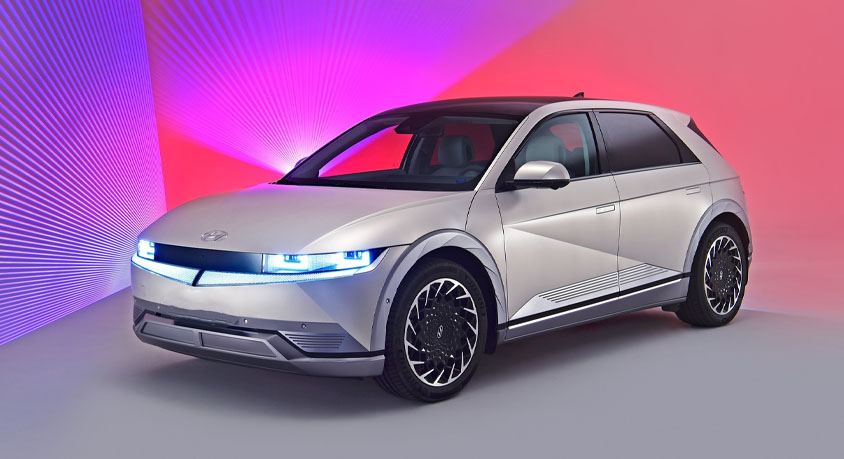
Ride quality over broken urban pavement is where the Ioniq 5 embarrasses both the Model Y and Ford Mustang Mach-E. City streets with potholes, expansion joints, and uneven asphalt feel smooth and muted inside the Ioniq 5. Its suspension tuning prioritizes comfort without feeling floaty. The Model Y’s stiff setup creates constant jitter on rough roads, while the Mach-E’s firmer damping transmits too much road noise. The tradeoff is clear: the Ioniq 5 offers superior daily comfort, yet falls slightly behind the Model Y in high-speed cornering stability.
The retro-futuristic interior space layout delivers unexpected family usability that outshines Tesla’s cramped ergonomics. When loading three kids with backpacks and sports gear in the back seat, the Ioniq 5’s flat floor and generous legroom eliminate the cramped, leg-bumping chaos common in the Model Y. Its adjustable rear seat sliding rails let you prioritize passenger space or trunk volume freely. The Model Y has marginally larger maximum cargo capacity, but its fixed rear seats make space adjustment far less flexible for mixed passenger and cargo scenarios.
Software update logic and system stability give the Ioniq 5 a massive upper hand for hassle-free ownership. Tesla’s frequent over-the-air updates often bring new bugs, screen freezes, or altered control logic that forces drivers to relearn basic functions. Hyundai’s update schedule is slower and more conservative, but every upgrade refines performance without breaking existing features. The downside is obvious: the Ioniq 5 lacks Tesla’s cutting-edge self-driving beta features, falling behind in advanced driver assistance innovation.
Cold weather range retention is another underrated win for the Ioniq 5. During early spring 40°F weather testing with heater usage, the Ioniq 5 only lost 22% of its rated range. The Model Y lost nearly 31% under the same temperature and driving routes. For users in northern states with harsh winters, this gap eliminates frequent range anxiety. In extreme high-temperature summer conditions, though, the Model Y’s thermal management system maintains slightly more consistent battery performance.
Build quality consistency remains the Ioniq 5’s most overlooked advantage. Panel gaps, door alignment, and interior trim finishing on the Ioniq 5 are uniform and precise straight from the factory. Tesla’s well-documented inconsistent build quality often leads to uneven gaps, loose trim pieces, and misaligned taillights on new vehicles. The only area Tesla dominates is long-term resale value, holding its market price better than Hyundai after three years of ownership.
At the end of the day, the hype never matches real road performance. The Tesla Model Y wins for supercharger network access, raw acceleration, autonomous tech, and resale value. But the Hyundai Ioniq 5 beats it in charging speed, daily comfort, build quality, cold-weather reliability, and user-friendly interior design. If you’re buying an EV for actual daily driving instead of brand bragging rights, the supposed “underdog” is genuinely the smarter pick.