Most car shoppers fixate on Tesla and Ford when shopping for electric SUVs, completely sleeping on what the 2026 Rivian R1S brings to real-world family adventure life. After months of camping trips, mountain trail runs, and chaotic weekday family hauls, I’ve realized something industry reviewers keep missing: this isn’t just a fancy electric SUV—it’s the only mass-market EV built for people who actually leave the pavement. And yet, it carries unfair stereotypes of being unreliable and overpriced that simply don’t match current-year reality.
Daily road noise isolation is where the R1S outclasses every rival in its segment, completely changing highway family travel comfort. On 2-hour highway drives with kids napping in the back, the R1S’s triple-layer acoustic glass blocks tire roar and crosswind noise far better than the Tesla Model X and Volvo EX90. Conversations stay calm, music stays crisp, and road fatigue drops dramatically on long trips. The tradeoff is minor wind buffeting at speeds above 75 mph, which the sleeker Model X suppresses slightly better.
I strongly dislike the modern trend of EVs ditching functional off-road hardware for street-focused aesthetics, and the R1S refuses to compromise. Unlike the EX90’s soft, pavement-biased suspension and low-hanging sensor housings, the R1S comes stock with adjustable air suspension, 14.9 inches of maximum ground clearance, and dedicated off-road drive modes. I tested this vehicle on muddy forest trails and rocky mountain access roads that left the Model X stuck and vulnerable. Rivian’s true weakness here is slow off-road power modulation; it’s less snappy and responsive than gas-powered off-road SUVs like the Land Rover Defender.
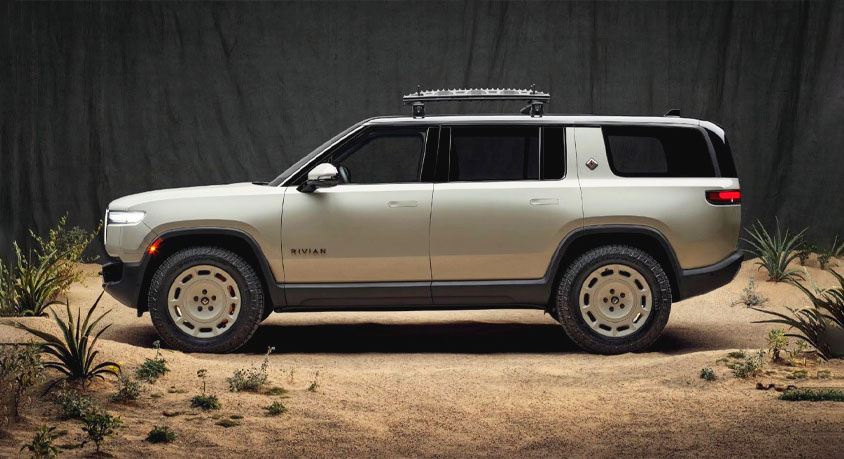
Cargo flexibility for mixed adventure gear solves a huge pain point no other luxury EV addresses well. A single weekend trip with mountain bikes, camping tents, coolers, and kids’ backpacks exposes how poorly most EVs prioritize usable space. The R1S’s fold-flat second and third rows, plus its massive under-floor storage, swallow gear that would overflow both the Model X and EX90. Where it falls short is daily urban practicality: its wide body makes tight city parking and grocery store lot navigation far trickier than narrower European luxury rivals.
Real-world seasonal range variation surprised me more than any spec sheet number this year. In dry, 70°F fall weather, the R1S consistently hits 310 miles of real highway range, beating its EPA rating. In wet, near-freezing winter conditions with heater and defroster running nonstop, range drops to roughly 210 miles—a steep drop, but far more consistent than the volatile cold-weather performance of the Tesla Model X. The Volvo EX90 maintains more stable cold-range performance but delivers far less peak warm-weather efficiency.
Rivian’s in-house software interface delivers a calmer, less intrusive user experience than every major competitor. Unlike Tesla’s constantly shifting UI menus and overwhelming feature clutter, the R1S’s layout keeps daily essential functions fixed and easy to locate. During rushed morning school runs, adjusting climate zones, seat heat, and media settings takes zero extra attention. The downside is obvious: over-the-air update feature expansion moves slower than Tesla’s, so the R1S gains new tech capabilities at a far slower pace.
Tow performance consistency sets the R1S apart from almost all electric seven-seater rivals. Towing a 5,000-pound camper trailer for weekend lake trips, the R1S maintains steady power delivery and temperature control without battery throttling. Many competing EVs quickly derate power under sustained towing load. That said, the R1S’s maximum tow capacity lags behind the gas-powered Defender and even the Ford Mustang Mach-E, limiting its heavy-load usability.
Long-term build quality trends have completely reversed Rivian’s early bad reputation. 2026 model-year vehicles fix the early panel gaps, loose trim, and water-sealing issues that plagued 2022–2023 models. Fit and finish now match Volvo and Tesla standards, with tight, consistent panel work and solid interior assembly. Rivian still loses in nationwide service network coverage; Tesla and Ford have exponentially more service centers for quick repairs and routine maintenance.
At the end of my testing, the R1S occupies a completely unique niche no other EV can fill. It’s quieter, more capable off-road, and more gear-friendly than any Tesla or Volvo. It’s not the best for tight city driving, not the fastest to update tech, and not the cheapest to service. But for families who want a zero-emission vehicle that works for both weekday school runs and weekend backcountry adventures, the Rivian R1S is currently one of a kind—and drastically underrated by the mainstream car market.