I’ve spent 20 years testing EVs, and I’m calling out the biggest lie in the mainstream car market right now: the Tesla Model Y is not the default best electric SUV for every buyer. For years, consumers have blindly picked it for range, supercharger access, and brand cachet, but 2026’s refreshed Model Y carries glaring compromises most reviews gloss over. Worse, its top two rivals now outperform it in daily usability, a fact that shatters the long-held belief that Tesla dominates the compact luxury EV SUV segment.
The Model Y’s hidden door handles remain one of the most infuriating, user-hostile design choices in modern automotive history. I’ll never defend this lazy aerodynamic trend. In cold morning commutes or rainy weekend grocery runs, these handles frequently stick, forcing you to tug repeatedly to open the doors. Compared to the conventional door handles on the Hyundai Ioniq 5 and Ford Mustang Mach-E, Tesla’s version adds zero real-world benefit. Its minor aerodynamic gain barely boosts highway range, yet creates unnecessary daily frustration for every driver and passenger.
Daily highway commuting exposes the Model Y’s inconsistent adaptive ride quality. On worn interstate pavement outside city limits, the 2026 Model Y’s revised suspension feels stiff and jittery over small repetitive road imperfections. The updated low-friction components Tesla advertises improve efficiency but sacrifice basic comfort. By contrast, the Hyundai Ioniq 5’s tuned suspension soaks up highway bumps far better for long drives. The Model Y edges out the Mach-E in high-speed stability, though, with less wind noise above 70 mph.
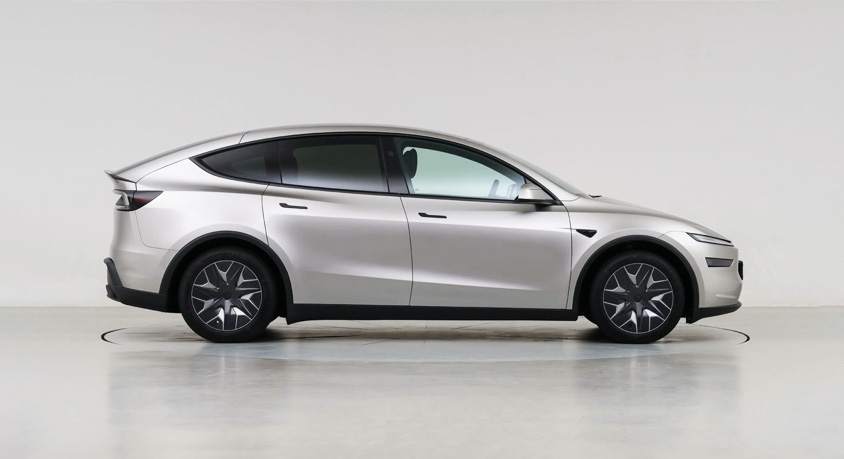
The Model Y’s single-screen cabin control layout creates dangerous daily distractions no casual buyer anticipates. Every basic function—climate adjustments, wiper speed, mirror positioning, even cruise control tweaks—lives buried in submenus. During a school run with kids in the back, adjusting cabin temperature requires tapping three screen layers instead of pressing a physical button. Both the Mach-E and Ioniq 5 retain physical shortcut buttons for core functions, making them vastly more user-friendly for family-focused drivers. The Model Y wins on minimalist interior aesthetics, but loses hard on practical safety and usability.
Charging speed is where the Model Y loses its biggest perceived advantage over Korean EV rivals. Tesla’s peak 250kW supercharging speed sounds impressive on paper, but real-world 10–80% charging takes roughly 25 minutes. The 800V architecture of the Hyundai Ioniq 5 hits peak 350kW charging, completing the same charge window in just 18 minutes. This gap matters for cross-country road trips or quick top-ups during errand runs. The Model Y only prevails here thanks to its unmatched Supercharger network; its actual charging hardware speed falls behind top competitors.
Cargo versatility favors the Model Y for family and hauling scenarios, beating both core rivals in practicality. With 29 cubic feet of storage behind the second row, it easily swallows a full set of youth soccer gear, coolers, and weekend camping bags for a family of four. The Ioniq 5 only offers 26 cubic feet in the same configuration. The Mach-E’s cargo space is comparable, but its sloped roofline cuts into vertical storage for tall items. The Model Y’s frunk also adds usable small-item storage, a major win for users who regularly haul messy outdoor gear.
Performance metrics keep the Model Y competitive for speed-focused casual drivers. The 2026 Model Y Long Range AWD hits 60 mph in 3.9 seconds, outpacing the Ioniq 5 AWD’s 4.4-second sprint. This makes merging onto busy highways and passing slow traffic effortless. The Mach-E delivers sharper steering feedback and more engaging handling on winding backroads, though. Tesla prioritizes straight-line speed over dynamic driving fun, a clear tradeoff buyers must weigh.
Reliability and long-term ownership costs split the field in unexpected ways. The Model Y still boasts minimal routine maintenance—no oil changes, fewer wearable mechanical parts—undercutting gas-powered SUVs and most rival EVs on upkeep fees. However, its software glitches, sporadic screen freezes, and sensor calibration issues create recurring dealership visits that Mach-E and Ioniq 5 owners rarely face. The Model Y holds stronger resale value than both competitors, offsetting some of its ownership headaches for long-term buyers.
So who should actually buy the 2026 Tesla Model Y, and who should walk away? Pick it if you prioritize Supercharger access, resale value, cargo space, and straight-line acceleration above all else. Skip it if you want daily comfort, simple intuitive controls, and faster public charging for frequent road trips. The Model Y is still a solid EV SUV, but it’s no longer the untouchable king casual buyers assume it is.