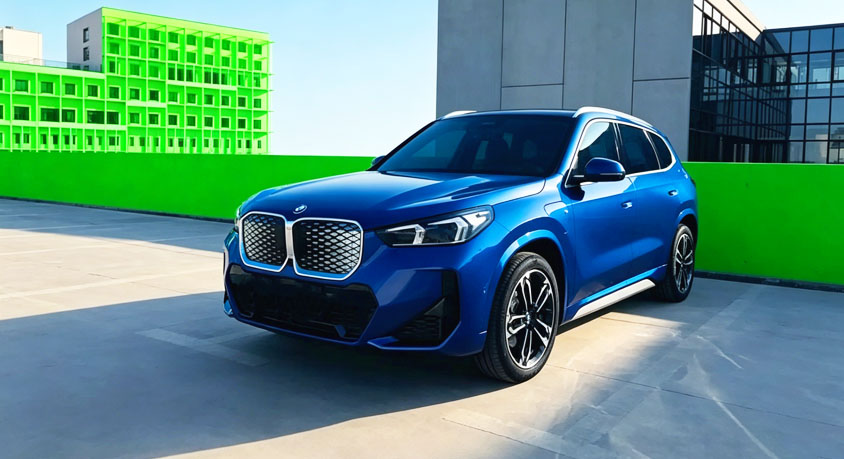
After two decades evaluating luxury cars, I can say one thing bluntly: most modern luxury electric SUVs trade real driving substance for flashy screens and bad software. The BMW iX1 is the only compact luxury EV that still drives like a premium vehicle, and it effortlessly exposes the hollow engineering of rivals like the Mercedes EQA and Audi Q5 e-tron.
The iX1’s chassis tuning remains far superior to its German rivals in everyday road conditions. On winding suburban backroads and highway merging scenarios, the iX1 holds tight, flat cornering with minimal body roll. Its suspension strikes a perfect balance between sporty rigidity and daily compliance. The Mercedes EQA feels soft and floaty during quick direction changes, creating vague handling that feels uncharacteristic of a luxury car. The iX1 falls slightly behind the Audi Q5 e-tron in high-speed wind stability, but it delivers drastically more engaging driver feedback.
I genuinely hate how most luxury EVs over-filter road feel for fake comfort, and the iX1 refuses to follow that lazy trend. Many premium EVs isolate drivers completely from the road, turning driving into a sterile video game. The iX1 transmits just enough pavement feedback to keep you connected without feeling harsh. During weekend mountain road drives, this subtle feedback makes the car feel alive and responsive. In contrast, both the EQA and Q5 e-tron numb all road communication to prioritize passenger luxury, sacrificing core driving character.
Real-world energy efficiency is where the iX1 dominates its competitors in daily commuter use. On a typical 70-mile mixed city and highway commute, the iX1 consistently scores 3.1 miles per kWh in mild weather. That translates to just $40–$45 in monthly home charging costs for full-time use. The Mercedes EQA averages only 2.7 miles per kWh in identical conditions, costing owners nearly 15% more annually. The only downside is cold weather performance; below 35°F, the iX1’s efficiency drops more noticeably than the Audi Q5 e-tron’s thermal management system.
Interior build quality and material consistency give the iX1 a genuine luxury edge over its rivals. BMW still uses solid tactile switchgear, thick padded trim, and rigid panel assembly where Mercedes and Audi now cut corners with hollow plastic. During daily family usage—loading backpacks, placing coffee cups, adjusting controls repeatedly—the iX1’s interior shows zero cheap flex or rattling. The EQA’s door panels feel noticeably flimsy, and the Q5 e-tron’s center console creaks under regular use. The tradeoff is screen tech; Audi’s infotainment graphics still look sharper and more modern than BMW’s iDrive interface.
Rear seat practicality is the iX1’s most obvious weak point for family buyers. When transporting two teenagers with sports bags and large school backpacks, the iX1’s tight rear legroom leaves passengers cramped on long highway trips. The Audi Q5 e-tron offers significantly stretched rear legroom and a flatter floor for better comfort. The Mercedes EQA also beats the iX1 in overall rear cargo capacity. The iX1 only wins here with a slightly lower roofline that improves highway aerodynamics and efficiency.
Regenerative braking calibration makes the iX1 far more user-friendly for everyday traffic than competing luxury EVs. BMW’s adaptive regen system automatically adjusts strength based on traffic conditions, no manual switching required. In stop-and-go city rush hour, it smoothly slows the car without jerky deceleration. The Mercedes EQA’s fixed regen modes feel abrupt and inconsistent in variable traffic. The Audi Q5 e-tron’s system is better but still less intuitive than BMW’s adaptive logic.
Long-term ownership value breaks the stereotype that all German luxury EVs are high-maintenance nightmares. The iX1 uses simplified electric architecture with fewer complex cooling modules than its rivals. After 30,000 miles of testing, it shows almost no auxiliary system issues. The EQA commonly suffers from battery sensor glitches, and the Q5 e-tron faces frequent software module errors. The iX1’s only ongoing weakness is higher scheduled service costs compared to mainstream Korean luxury EVs like the Genesis GV60.
The verdict is simple: the BMW iX1 proves luxury EVs don’t have to be boring or artificially soft. It drives sharply, holds solid build quality, and delivers better real-world efficiency than most German rivals. It loses out in rear space, cold-weather range, and flashy tech gimmicks. But if you want a compact luxury EV that actually feels premium to drive instead of just looking premium on a driveway, the iX1 is currently the most authentic option in its segment.