Last week, I watched a buddy of mine hop into his impeccably restored 1998 Jeep Cherokee—a machine built with more soul than anything currently rolling off a modern assembly line—and shove a key into the dash that looked like a janitor’s ring from a 1920s insane asylum. He had his house keys, a Swiss Army knife, a heavy brass bottle opener, and three useless souvenir fobs hanging off the ignition. As he hit a pothole leaving the driveway, I saw that massive pendulum swing, tugging at the steering column with the kind of leverage Archimedes would have envied. He thinks he’s being organized; I think he’s five miles away from his engine cutting out at 65 mph on the turnpike.
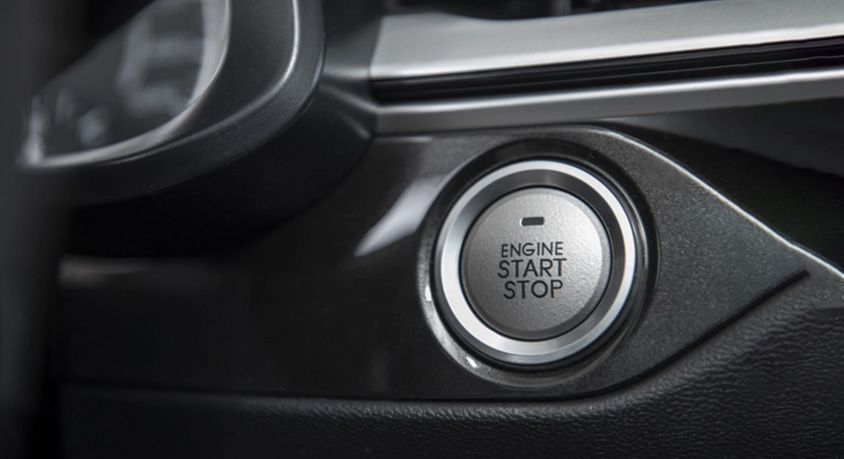
We live in an era where car manufacturers are obsessed with "convenience," which usually means replacing perfectly good mechanical parts with fragile electronics. I’ve gone on record a dozen times saying I despise the current trend of proximity fobs and push-button starts. They feel like pressing a button on a cheap microwave, lacking the tactile, heavy "thunk" of a well-engineered metal key turning in a cylinder. But as much as I hate the soulless nature of a Tesla’s key card or the mushy plastic buttons on a modern Ford, there is one thing those electronic systems get right: they don't let you hang two pounds of junk off the internal guts of your starting system.
When you shove a key into an ignition cylinder, you are engaging a series of tiny, precision-machined brass wafers and springs. These components were designed to support the weight of a single thin piece of steel, not a three-pound collection of lifestyle accessories. When you hang a heavy keychain, you are creating a literal lever. Every time you accelerate, brake, or hit a bump on your way to Home Depot, that weight is pulling downward and outward on the cylinder’s internals. Over time, that constant gravitational tugging grinds down the delicate wafers, hollowing out the channel and making the fit increasingly "sloppy."
It starts with a minor annoyance—maybe you have to jiggle the key just right to get the car to turn over, or perhaps the steering lock feels a bit "notchy." But the endgame is a disaster. If those internal wafers wear down enough, the vibration of the road can actually cause the ignition to click back from the "On" position to "Accessory" while you’re driving. Suddenly, your power steering vanishes, your brake booster dies, and you’re wrestling a two-ton metal box into a ditch because you wanted to carry a heavy souvenir from your trip to the Grand Canyon on your car key. It’s a mechanical heart attack caused by laziness.
Compare the ignition feel of a classic 90s Honda Civic to a modern BMW. The Honda has a mechanical honesty; the key slides in with a metallic "snick" and turns with a predictable resistance. The BMW, if it even has a slot, feels like you’re inserting a credit card into an ATM. But even that old Honda—the gold standard of reliability—will eventually surrender if you treat the ignition like a coat hook. I’ve seen Toyota steering columns, usually the most bulletproof parts on the planet, completely gutted because the owner insisted on hanging a miniature cast-iron skillet keychain off the ignition for five years.
I have a particular bias against the "everything-in-one" lifestyle. If you’re heading out to pick the kids up from soccer practice or hauling a load of lumber, you don't need your gym membership card, your office keycard, and your decorative pewter skull swinging around your knee. It’s an ergonomic nightmare and a mechanical death sentence. Beyond the internal wear, a heavy keychain creates a constant, rhythmic "clinking" sound that drives me absolutely insane. It’s the sound of precision parts being slowly murdered by neglect. If your car’s interior doesn't sound like a bank vault, you aren't doing it right.
If you absolutely must carry your entire life on your belt loop, invest in a quick-release system. Keep your car key on its own separate ring. When you get into the driver’s seat, the only thing going into that ignition should be the key itself and maybe a lightweight remote fob. Everything else stays in your pocket or the cupholder. You’ll notice the difference immediately. The key will turn smoother, the steering lock won't fight you, and you won't be putting a thousand pounds of leverage on a piece of brass the size of a fingernail.