Last Monday, a reader sent me a photo of a three-month-old luxury crossover that had been flat-bedded to the dealership because it wouldn't start. The diagnostic fee alone was enough to make a grown man weep, but the culprit wasn't a faulty sensor or a software glitch. It was a hungry field mouse in a Connecticut suburb who decided that the main engine harness looked like a five-course tasting menu. For twenty years, I’ve watched car companies pull all sorts of nonsense, but the industry-wide shift to soy-based wiring insulation is perhaps the most "brilliant" mistake they’ve ever made. In their desperate rush to look "green" and save a few cents per foot of copper, manufacturers have effectively turned your engine bay into a giant, expensive granola bar.
If you’re driving an older truck from the 90s, your wires are likely coated in petroleum-based plastic. To a rat, that stuff tastes like a chemical plant—it’s repulsive. But in your modern Honda, Toyota, or Ford, that insulation is made from a soy-based bioplastic. It’s sustainable, it’s biodegradable, and to a rodent looking for a warm place to spend a chilly night, it smells like Sunday brunch. They aren't chewing your wires because they’re angry; they’re chewing them because the industry literally invited them to dinner. It’s the kind of corporate oversight that sounds like a conspiracy theory until you’re staring at a five-thousand-dollar bill for a new wiring loom that isn't covered by your factory warranty.
I have zero patience for the "eco-friendly" excuses the PR departments shove down our throats. It’s the same half-baked logic that gives us those infuriating hidden door handles that refuse to pop out when the temperature drops below freezing. They sacrifice utility and reliability at the altar of aesthetics and "sustainability." If a car cannot survive being parked in a suburban driveway without being eaten from the inside out, it’s not an "eco-friendly" vehicle—it’s an engineering failure. We’ve traded the rugged, oil-scented reliability of the past for a fragile, soy-flavored future where a single squirrel can total your car by chewing through the CAN bus.
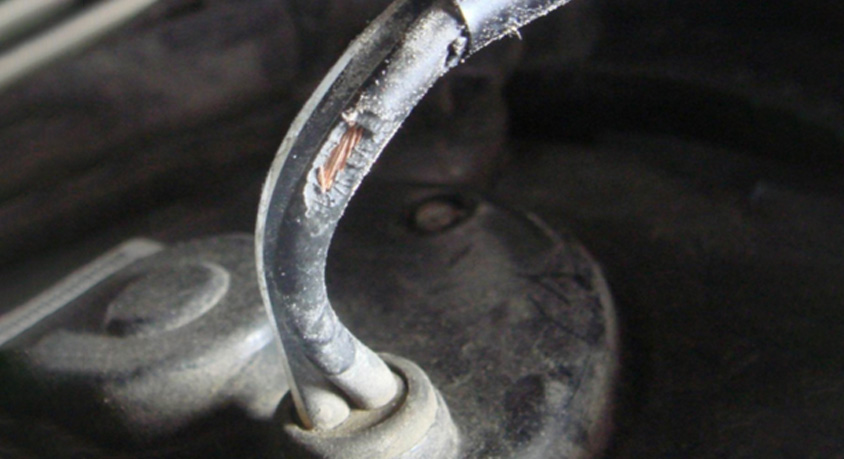
Imagine you’re prepping for a family road trip. You’ve loaded the kids’ soccer gear into the back, you’ve got the roof rack secured, and you’ve just spent three hours detailing the interior until the steering wheel feels as clean and grippy as a fresh baseball bat. You turn the key, and instead of that satisfying, low-frequency burble of a cold start, you get a Christmas tree of warning lights on the dash and a "system failure" message. Your car isn't broken because of a mechanical defect; it’s broken because a rat found the knock sensor wire particularly savory. It’s a violation of the bond between man and machine, and it happens more often in American suburbs than the manufacturers care to admit.
Comparing a modern Mercedes-Benz to an old-school Lexus in this regard is a lesson in frustration. While the German cars are packed with high-tech sensors that make them drive like dream-machines, their intricate wiring harnesses are a nightmare to repair once the local wildlife gets involved. A Toyota might be a bit more "boring" to drive—the steering rack feeling more like a PlayStation controller than a direct link to the road—but at least their engineers eventually realized the problem and started selling "rat-proof" tape infused with capsaicin. Yes, you heard that right: the solution to "green" engineering is to wrap your car in spicy tape to keep the animals from eating the evidence of your environmental virtues.
If you want to protect your investment, you have to stop thinking like a consumer and start thinking like a survivalist. Forget the expensive ultrasonic "pest repellers" you see advertised on late-night TV; they’re about as effective as a "No Rats Allowed" sign. The most effective methods are the "dirtiest" ones. I’ve seen guys in rural Pennsylvania swear by dryer sheets stuffed into every nook and cranny of the engine bay, but the real winner is peppermint oil. Rodents have incredibly sensitive noses, and a concentrated blast of peppermint turns your engine bay into a sensory nightmare for them. It’s the mechanical equivalent of a flashbang.
Another "old-school" trick is leaving your hood open if you’re parking in a secure garage. Rats hate open spaces and light; they want a dark, cozy cave where they can gnaw in peace. By popping the hood, you’re taking away their penthouse suite. It’s a simple, free habit that beats the hell out of paying a mechanic to spend forty hours stripping your dashboard just to reach a chewed-through segment of the firewall harness. It’s the kind of common-sense maintenance that doesn't make it into the owner’s manual because no manufacturer wants to admit their "Car of the Year" is a snack for a common vermin.